
The Development of Object Permanence: A Timeline for FirstTime Parents


Welcome to BabyCareHub, your ultimate guide to navigating the incredible journey of parenthood! Are you curious about the fascinating leaps in your little one's understanding of the world? We delve into the intriguing development of object permanence, a crucial milestone in your baby's cognitive growth. Discover the Baby object permanence timeline and gain valuable insights into what to expect at each stage. Prepare to be amazed by your baby's rapid development – let's explore together!
- Understanding Object Permanence in Infants
- Baby Object Permanence Timeline: 0-3 Months
- Baby Object Permanence Timeline: 4-6 Months
- Baby Object Permanence Timeline: 7-9 Months
- Baby Object Permanence Timeline: 10-12 Months
- Baby Object Permanence Timeline: 12+ Months
- Supporting Your Baby's Object Permanence Development
- Frequently Asked Questions
- Final Reflection: Understanding the World Through a Baby's Eyes
- Unlock Your Baby's World: Nurturing Development
Understanding Object Permanence in Infants
Object permanence, the understanding that objects continue to exist even when they cannot be seen, heard, or touched, is a crucial developmental milestone for babies. This seemingly simple concept is foundational to a child's cognitive development, impacting their ability to learn, problem-solve, and form secure attachments. This article provides a comprehensive timeline of object permanence development, offering first-time parents valuable insights into this fascinating aspect of their baby's growth.
We will explore what object permanence entails, its significance in your baby's journey, and the key signs to watch for as your little one navigates this cognitive leap. Understanding this developmental milestone will empower you to support your baby's cognitive growth and build a strong foundation for their future learning and development. This guide focuses specifically on providing a clear and practical "baby object permanence timeline" to help parents track their child's progress.
What is Object Permanence?
Object permanence is the understanding that objects exist independently of one's perception of them. Before developing object permanence, infants believe that if an object is out of sight, it ceases to exist. This is why the classic "peek-a-boo" game is so engaging for young babies – the sudden reappearance of a familiar face is genuinely surprising and exciting!
As babies develop object permanence, they begin to understand that objects continue to exist even when hidden, leading to more sophisticated play and interactions with their environment. This development is not a sudden switch but a gradual process, with different stages of understanding emerging over time. We’ll explore these stages in more detail below, providing a clear and easy-to-follow baby object permanence timeline.
Why is Object Permanence Important for Baby Development?
The development of object permanence is a significant indicator of a baby's cognitive maturation and has far-reaching implications for their future development. It's not just about understanding where toys are; it's about building a foundational understanding of the world and how it works. Several key areas benefit from a fully developed sense of object permanence:
- Problem-solving: Babies who understand object permanence are better equipped to solve simple problems, such as finding a hidden toy or retrieving a dropped object. This ability to mentally represent objects lays the groundwork for more complex problem-solving skills later in life.
- Symbolic thought: Object permanence is a stepping stone to symbolic thought, the ability to use symbols (like words or images) to represent objects or ideas. This is crucial for language development and abstract thinking.
- Attachment security: Understanding that caregivers continue to exist even when out of sight contributes to a sense of security and trust in the parent-child relationship. This secure attachment is vital for emotional well-being and social development.
- Memory development: The development of object permanence is intrinsically linked to memory development. Remembering where an object was hidden requires the ability to retain information about the object's location, even after it is no longer visible.
Signs Your Baby is Developing Object Permanence
Recognizing the signs of developing object permanence can be incredibly rewarding for parents. While the timeline varies between babies, here are some key indicators you can look for:
- 4-7 Months: Babies may begin to show interest in hidden objects, but they often lose interest quickly if the object is not immediately found. They may only look where they last saw the object.
- 8-12 Months: Babies will start actively searching for hidden objects, exhibiting a more deliberate and persistent search behavior. However, they often make the "A-not-B error," meaning they will continue to search for an object in the last place they found it, even if they see it being hidden in a new location.
- 12-18 Months: The A-not-B error typically diminishes, and babies demonstrate a more complete understanding of object permanence. They can successfully find objects hidden in multiple locations and begin to understand that objects can be moved while out of sight.
- 18 Months and beyond: Object permanence becomes fully developed, paving the way for more complex cognitive abilities, such as pretend play and symbolic thinking. Babies can now engage in more sophisticated problem-solving and understand the concept of displacement (objects can be moved from one location to another).
This timeline provides a general guideline. Remember that every baby develops at their own pace, and some variation is perfectly normal. Enjoy this exciting stage of your baby's development and celebrate their milestones! 🎉
Baby Object Permanence Timeline: 0-3 Months
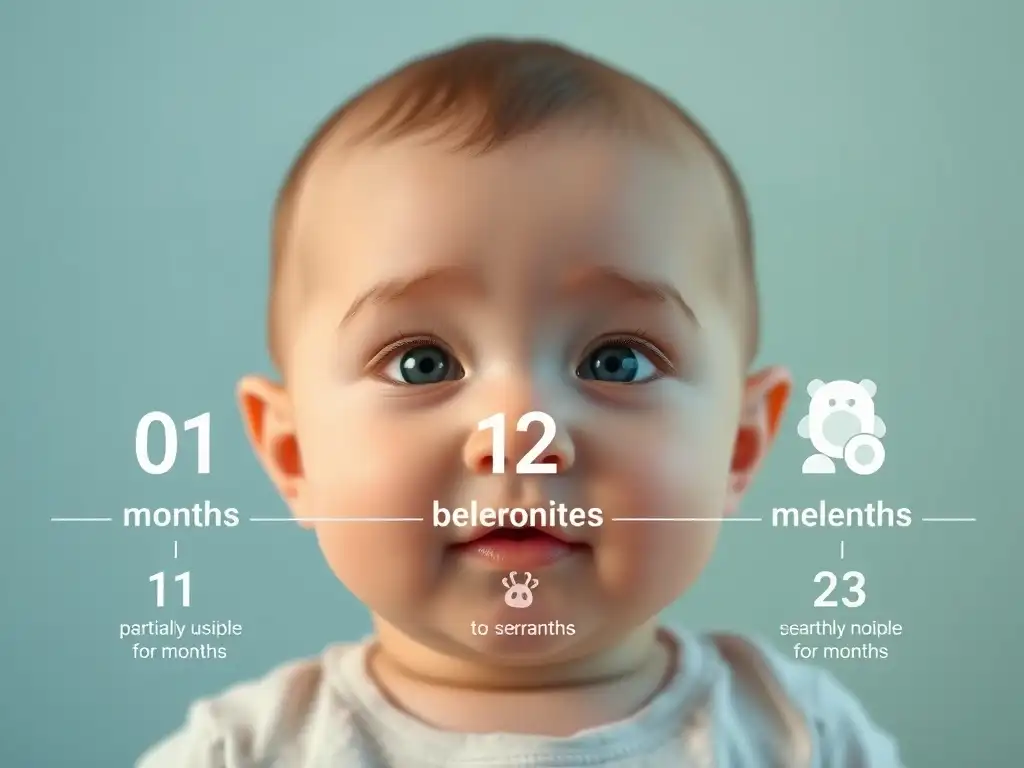
This section details the developmental milestones related to object permanence in babies aged 0-3 months. Understanding this timeline can help first-time parents appreciate their baby's cognitive development and offer appropriate stimulation. Remember, every baby develops at their own pace, so variations are perfectly normal. This timeline provides a general framework, not a rigid schedule. The key is to focus on engaging your baby and providing a stimulating environment.
Early Signs: Gaze Following and Reaching
During the first few months of life, the foundations of object permanence are laid. While your baby won't yet grasp the concept that objects continue to exist even when out of sight, you'll start to notice some crucial early signs. These include:
- Gaze Following: Around 1-2 months, your baby will likely begin to follow moving objects with their eyes. This shows an increasing awareness of their surroundings and the objects within them. Try gently moving a brightly colored toy or a rattle in front of them and observe their reaction. Do they track the movement? This is a fantastic early indicator!
- Reaching and Grasping: Between 2-3 months, you'll probably see your baby starting to reach for objects within their grasp. Initially, these attempts might be clumsy and uncoordinated, but they represent a significant step towards understanding the relationship between themselves and the objects around them. Offer your baby a variety of textured toys and observe how they explore them through touch. This tactile exploration is crucial for their sensory development and contributes to their developing understanding of object permanence.
- Anticipatory Reaching: Towards the end of this period, some babies may even exhibit anticipatory reaching, meaning they reach for an object before it’s fully within their reach. This shows a growing understanding of the object's trajectory and location. This is a subtle but significant advancement in their cognitive skills.
Understanding the World Through Senses
At this stage, your baby's understanding of the world is primarily driven by their senses. They learn about objects through seeing, hearing, touching, smelling, and tasting. Providing a rich sensory environment is crucial for fostering their cognitive development. This includes:
- Visual Stimulation: Hanging mobiles above the crib, displaying brightly colored toys, and spending time outdoors offer visual stimulation. The movement and variety of colors will captivate their attention and help them track objects.
- Auditory Stimulation: Singing songs, playing soft music, and talking to your baby helps them associate sounds with objects and events. This auditory stimulation is an important aspect of their sensory development.
- Tactile Exploration: Offering a variety of textured toys, allowing them to explore different fabrics and materials, contributes to their understanding of object properties. This tactile experience is crucial for building their sensory map of the world.
The 0-3 month period is about laying the groundwork. While true object permanence is still developing, these early signs demonstrate the beginning of your baby's journey towards understanding the persistent existence of objects, even when hidden from view. Remember to celebrate each small milestone and enjoy this incredible period of growth and development. The journey of object permanence development is a fascinating one, and you are playing a vital role in your baby's progress! 👶
Baby Object Permanence Timeline: 4-6 Months
This section focuses on the crucial developmental leap in object permanence that occurs between 4 and 6 months of age. We'll explore the fascinating peek-a-boo stage and the burgeoning memory skills that lay the foundation for a deeper understanding of the world. Understanding this timeline can help first-time parents better appreciate their baby's cognitive growth and engage them in activities that stimulate further development. This is a key period for building a strong parent-child bond through interactive play and responsive care.
Partial Object Permanence: Peek-a-Boo Stage
The classic game of peek-a-boo is more than just fun; it's a powerful tool for teaching object permanence. Between 4 and 6 months, babies begin to demonstrate partial object permanence. This means they're starting to understand that objects continue to exist even when they can't see them, but only for a limited time and under specific circumstances.
The joy they experience during peek-a-boo stems from this burgeoning understanding. When you cover your face and then reveal it, the baby isn't just reacting to a sudden appearance; they're experiencing the re-emergence of a known entity that they momentarily believed had disappeared.
This stage is characterized by a gradual shift. Initially, if an object is completely hidden, the baby may lose interest entirely, exhibiting no search behavior. However, as they progress, they show increasing anticipation and excitement when the hidden object (or person!) reappears. This is a significant cognitive breakthrough, representing a move away from the purely present-moment focus of younger infants. The peek-a-boo game provides a safe and engaging way to practice this crucial skill. Remember to vary the game – hide behind different objects, use different hiding spots, and even let the baby try to hide you!
Developing Anticipation and Memory
The development of object permanence is intricately linked to the development of memory. As babies approach 6 months, they begin to show signs of anticipatory behavior. This means they can remember past experiences and anticipate future events related to objects. For example, if you consistently use a specific rattle before feeding time, the baby may begin to associate the rattle with the upcoming meal, exhibiting excitement or anticipation when they see it.
This burgeoning memory capacity is crucial for the development of object permanence. It allows babies to mentally represent objects even when they are out of sight. They are not just reacting to the immediate sensory input; they are actively recalling past experiences and using this information to predict future events.
This transition is not sudden; it’s a gradual process marked by increasing sophistication in anticipation and memory recall. This period is also marked by an increased interest in cause and effect, further strengthening their understanding of object permanence. For instance, dropping a toy repeatedly and watching it fall becomes a fascinating experiment in understanding the relationship between action and consequence, further reinforcing their understanding that the toy still exists even when it's out of sight.
The development of object permanence, even in its early stages, is a significant milestone in a baby's cognitive development. It's a testament to their rapidly growing brainpower and their increasing ability to understand and interact with the world around them. Observing these milestones can be incredibly rewarding for parents, offering a glimpse into the fascinating cognitive journey of their little one. Remember to document these moments; they are precious memories you will cherish forever!
Baby Object Permanence Timeline: 7-9 Months

This section focuses on the significant developmental leaps in object permanence that typically occur between 7 and 9 months of age. Remember, every baby develops at their own pace, so these are guidelines, not strict rules. Variations are completely normal! Consistent, loving care is key to supporting your little one's growth. Let's delve into the fascinating world of your baby's understanding of objects.
Around 7 months, you'll likely notice a shift in your baby's understanding of where things go. Previously, if an object disappeared from view, it was essentially "gone" for them. Now, they're beginning to grasp the concept that objects continue to exist even when they can't be seen. This newfound understanding manifests as increased searching behavior.
You might observe your baby reaching for a toy that's partially hidden under a blanket. They're not just randomly batting at the blanket; they're actively trying to retrieve the object. This is a crucial step in the development of object permanence. The search might be somewhat clumsy at first, perhaps only lifting a corner of the blanket. But over time, their search strategies become more refined and efficient. They'll start to fully uncover the hidden object, demonstrating a clear understanding that it's still there.
This stage is incredibly exciting to witness! It shows a significant cognitive leap forward. Encourage this development by playing simple hiding games with toys. Show them a toy, then cover it with a cloth, making sure they see you do it. Their delighted squeals when they find the hidden treasure are a testament to their growing understanding of the world. Remember to vary the hiding places and the types of coverings to prevent boredom and encourage exploration.
Understanding Object Location: A More Sophisticated Search
By 8-9 months, the search for hidden objects becomes even more sophisticated. Your baby is no longer just reacting to partially visible objects. They're beginning to understand that an object can be hidden in multiple locations, and they'll actively search for it in those places.
For instance, if you hide a toy under a pillow, then move it to a box, your baby may initially look under the pillow. However, if they don't find it there, they'll likely start searching in other places where they've previously seen it, showing a growing understanding of object location and the permanence of the object itself. This indicates a more advanced stage of object permanence development.
The development of this skill is directly tied to the development of their memory and problem-solving abilities. This is a wonderful opportunity to engage your baby in activities that challenge their spatial reasoning skills. You can use stacking cups or building blocks to further stimulate this developmental milestone. Remember to celebrate their successes and offer encouragement along the way. This positive reinforcement will help solidify their understanding and boost their confidence. This period is a significant milestone in your baby's cognitive development, paving the way for more complex learning and understanding in the future. 🧸
Baby Object Permanence Timeline: 10-12 Months
This section focuses on the significant developmental leap in object permanence that typically occurs between 10 and 12 months of age. While earlier stages show nascent understanding, this period marks a crucial shift towards a more complete grasp of object existence independent of perception. We'll explore the hallmarks of this stage, including the achievement of full object permanence and the persistent, though often temporary, challenge of the A-not-B error. This information will help first-time parents better understand their baby's cognitive development and appreciate the milestones they are achieving.
Full Object Permanence: Active Searching for Objects
By 10-12 months, most babies demonstrate full object permanence. This means they understand that objects continue to exist even when they are out of sight. This isn't a sudden, overnight development; it's a gradual process building upon earlier stages. Instead of simply ceasing to search when an object is hidden, babies at this stage will actively and persistently look for it, even after multiple concealments. They'll lift blankets, open drawers, and even move obstacles to find the desired item. This active searching is a strong indicator of fully developed object permanence.
This understanding is not just about finding the toy; it represents a significant cognitive leap. It signifies the baby's growing ability to form mental representations of objects and events – a critical step in building their understanding of the world. For example, if you hide a favorite rattle under a pillow, a baby demonstrating full object permanence will confidently reach for the pillow and retrieve the rattle, demonstrating a clear memory of its location.
This ability to mentally track an object’s location is a hallmark of this developmental stage. The success rate in finding hidden objects will vary, of course, depending on the complexity of the hiding place and the baby's overall engagement. However, the consistent effort to search is the key indicator.
A-not-B Error: Understanding Object Location Challenges
Despite achieving full object permanence, many babies in this 10-12 month age range still struggle with the A-not-B error. This fascinating phenomenon is characterized by the baby's repeated search for an object in a location where it was previously hidden (location A), even after witnessing it being hidden in a new location (location B). For instance, if you hide a toy under a blanket (A), then later hide it under a pillow (B), while the baby watches, they might still reach for the blanket (A) even though they saw you place the toy under the pillow (B).
The A-not-B error is not a sign of a developmental delay. Instead, it highlights the ongoing maturation of the baby's working memory and inhibitory control. It suggests a struggle to suppress the prepotent response of reaching for the familiar location (A) and instead execute the more cognitively demanding task of remembering and reaching for the new location (B). This error gradually disappears as the baby's executive functions strengthen. The persistence of the A-not-B error varies greatly among individuals, with some babies overcoming it earlier than others.
Factors such as temperament, prior experience, and the complexity of the hiding task can all influence the duration of this error. Observing this behavior provides valuable insight into the ongoing development of your baby's cognitive abilities. Remember, every baby develops at their own pace. 👶
Baby Object Permanence Timeline: 12+ Months
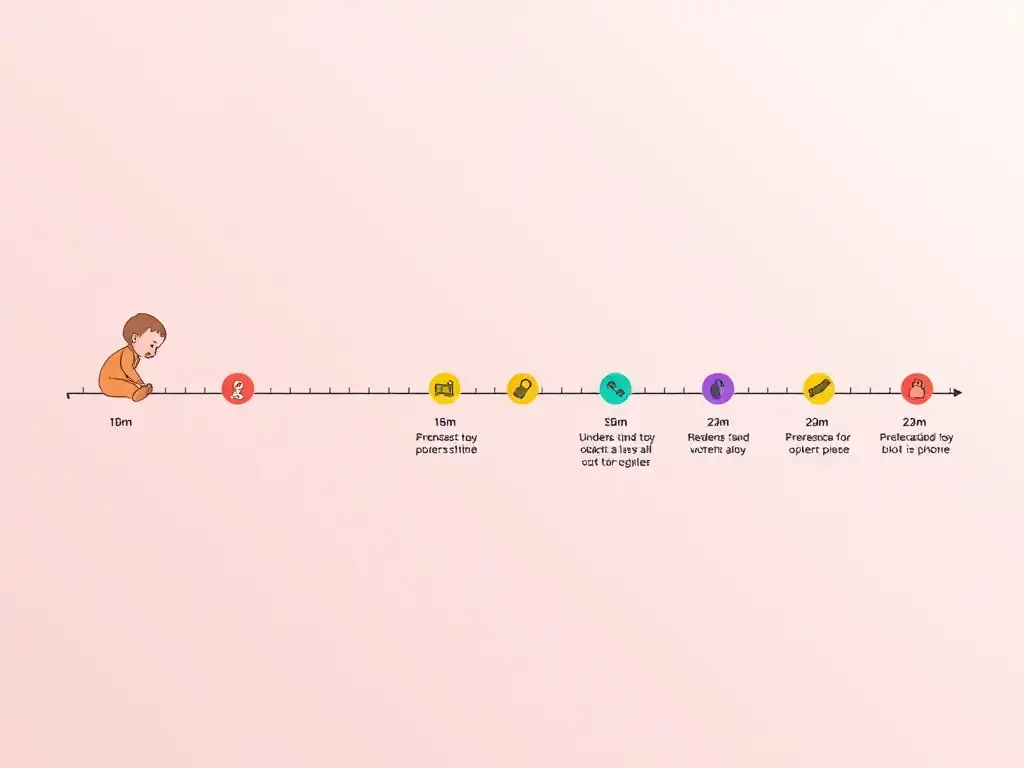
This section focuses on the development of object permanence in babies aged 12 months and older. While the foundational understanding of object permanence typically emerges earlier, the abilities significantly refine and expand during this period. We'll explore the advanced stages of this crucial developmental milestone, highlighting key behavioral changes parents can expect to observe. Understanding this timeline can help parents gauge their baby's progress and celebrate their growing cognitive abilities. Remember, every baby develops at their own pace, so variations are normal. This timeline offers a general guideline, not a rigid benchmark.
Advanced Object Permanence: Mental Representation of Objects
By 12 months, most babies demonstrate a more sophisticated understanding of object permanence. This goes beyond simply knowing an object exists when hidden. They now begin to form mental representations of objects – essentially, they can hold an image of the object in their mind even when it's out of sight. This is a significant leap in cognitive development.
For example, if you hide a toy under a blanket, a baby at this stage won't just reach for the blanket immediately, they might pause, consider where they last saw it, and then purposefully lift the blanket. This signifies a more deliberate and planned search, indicating a higher level of understanding. The search is no longer purely reflexive but based on a mental image of the toy's location.
This advanced object permanence is also evident in their interactions with toys. They might pretend to feed a doll, use a block as a phone, or engage in other forms of symbolic play, which relies heavily on mental representation. The ability to mentally manipulate objects and their properties lays the groundwork for more complex cognitive skills later in life.
The development of this skill is closely tied to the maturation of the brain's prefrontal cortex, a region crucial for higher-level cognitive functions. Observing these advancements reinforces the crucial role of consistent interaction and engaging play in a baby's cognitive development. Providing a variety of stimulating toys and engaging in interactive games can significantly support this process.
Object Permanence and Symbolic Play
The development of object permanence is intrinsically linked to the emergence of symbolic play. Symbolic play is when a child uses one object to represent another. For instance, a block might become a car, a banana might become a phone, or a blanket might become a cape.
This type of play becomes increasingly prevalent after 12 months, demonstrating a clear link between the baby's understanding of object permanence and their ability to engage in imaginative play. This isn't simply pretend play; it requires the child to understand that the object can simultaneously be itself and represent something else. This mental flexibility is a powerful indicator of cognitive advancement.
Consider this example: A 14-month-old uses a wooden spoon as a telephone, holding it to their ear and making “talking” sounds. This isn't just random play; it shows a conscious understanding that the spoon can represent a telephone, even though it isn't one. This demonstrates a sophisticated grasp of mental representation and symbolic thought. This capacity for symbolic thinking is a cornerstone of language development and future cognitive abilities.
Encouraging symbolic play through providing diverse toys and engaging in imaginative play sessions with your baby can help nurture this crucial developmental milestone and contribute to a strong foundation for future learning. The ability to engage in symbolic play is a positive indicator of healthy cognitive development and a strong predictor of future language and social skills. The more opportunities a child has to engage in this type of play, the more robust their cognitive abilities will become.
Supporting Your Baby's Object Permanence Development
Understanding object permanence—the understanding that objects continue to exist even when they cannot be seen—is a crucial developmental milestone for your baby. This understanding is not an overnight achievement; it unfolds gradually, with significant leaps occurring at various stages. Successfully navigating this developmental phase requires patience, understanding, and engaging activities tailored to your baby's age and abilities. Remember, every baby develops at their own pace, and there's a wide range of "normal" development. This timeline offers a general guideline, not a rigid schedule.
Engaging Activities to Foster Object Permanence
From the moment your baby is born, you can begin subtly fostering the development of object permanence. Early activities focus on capturing your baby's attention and encouraging visual tracking. As they grow, the activities become more interactive and challenging.
0-4 Months: Focus on high-contrast visuals. Black and white patterns, simple toys with bold colors, and your own face are excellent tools. Make faces, talk to your baby, and move objects slowly across their field of vision to encourage tracking. This lays the foundation for understanding that things exist even when they're not directly in front of them. Think of this as pre-object permanence—building the visual and cognitive skills necessary for later understanding.
4-8 Months: Introduce peek-a-boo! This classic game is perfect for this stage. The surprise and delight when your face reappears reinforces the idea that things don't disappear completely. Also, start hiding partially visible toys under a blanket or partially behind objects. Initially, they will likely lose interest quickly, but their attention span will gradually increase as they begin to grasp the concept.
8-12 Months: Now's the time to increase the complexity. Try hiding a toy completely under a blanket. Initially, your baby might not search for it, but with repetition, they'll start to understand that the toy still exists, even though they can't see it. Use simple games like "Where's the teddy?" to actively engage them in the search. This active participation is key to solidifying the concept.
12 Months and Beyond: Continue playing hiding games, but make them more challenging. Hide the toy in different locations, under different coverings, or even in a closed container. Observing your baby's reaction—their persistence in searching—provides valuable insight into their understanding of object permanence. Introduce simple puzzles with one or two pieces. This further strengthens their understanding of spatial relationships and object permanence. 🎉
Creating a Stimulating Environment for Your Baby
Your baby's environment plays a significant role in their development. A stimulating and engaging space provides opportunities for exploration and discovery, crucial for building object permanence.
Creating a stimulating environment isn't about expensive toys; it's about thoughtful arrangement and interactive play. Avoid overwhelming your baby with too many toys at once. Rotate toys regularly to maintain their novelty and keep your baby engaged. Keep the environment safe and accessible, allowing your baby to explore independently within safe boundaries.
Consider these elements:
- Visual Stimulation: Hang mobiles with contrasting colors and textures. Place colorful objects around the crib or play area within reach. Mirrors are also a great way to capture their attention.
- Auditory Stimulation: Sing songs, talk to your baby, and play soft music. These sounds help them associate objects with sounds and build a richer understanding of the world around them.
- Tactile Stimulation: Provide a variety of textures for your baby to touch and explore—soft blankets, crinkly toys, and smooth wooden blocks. This helps them connect their sense of touch with the objects they see.
- Interactive Play: Engage in regular interactive play sessions. This doesn't have to be elaborate; simple games like peek-a-boo and hiding toys under blankets are incredibly effective.
When to Seek Professional Guidance Regarding Object Permanence Development
While every baby develops at their own pace, it's important to recognize when a delay in object permanence might warrant professional attention. While there's a range of typical development, significant delays can sometimes indicate underlying developmental concerns.
Signs that may warrant a consultation with your pediatrician or a developmental specialist include:
- Lack of interest in exploring objects: If your baby consistently shows little interest in interacting with objects or toys, even after repeated attempts at engaging them.
- Failure to search for hidden objects after 12 months: While some variation is normal, a consistent failure to search for hidden objects even after repeated demonstrations can be a cause for concern.
- Difficulty following objects with their eyes: Persistent difficulty tracking moving objects could indicate a vision problem that might impact object permanence development.
- Significant delays in other developmental areas: Delays in other areas, such as language development or motor skills, might be linked to delays in object permanence.
Remember, early intervention is key. If you have any concerns about your baby's development, don't hesitate to seek professional guidance. A timely assessment can provide support and address any potential issues early on. Early intervention can make a significant difference in your baby's overall development and well-being.
Frequently Asked Questions
What is object permanence?
Object permanence is the understanding that objects continue to exist even when they cannot be seen, heard, or touched. It's a crucial developmental milestone for babies.
When does object permanence typically develop?
The development of object permanence is gradual. It usually begins to emerge around 4-7 months of age, with a more complete understanding developing by 12-18 months.
How can I help my baby develop object permanence?
Engage in peek-a-boo games and hide-and-seek with toys. Use simple games that involve hiding objects partially, then fully, to gradually challenge their understanding.
What if my baby isn't showing signs of object permanence at the expected age?
Every baby develops at their own pace. However, if you have concerns, consult your pediatrician. They can assess your baby's development and offer guidance.
Are there any activities to specifically boost object permanence development?
Yes! Playing with cause-and-effect toys, such as stacking blocks or toys that make sounds when manipulated, can greatly aid in this developmental process. Interactive playtime is key.
Final Reflection: Understanding the World Through a Baby's Eyes
The development of object permanence is not merely a developmental milestone; it's a window into the breathtaking expansion of a child's understanding of reality. This journey, from the initial confusion of a disappearing toy to the confident search for a hidden object, is a testament to the incredible power of the developing brain. Understanding this timeline empowers parents to better support their child's cognitive growth and appreciate the profound cognitive leaps they are making.
Witnessing my own child's gradual grasp of object permanence was a deeply moving experience. It highlighted the incredible complexity of seemingly simple actions, like reaching for a toy or searching for a dropped rattle. The child's world is not merely a smaller version of the adult's world; it is a different world altogether.
This quote perfectly encapsulates the unique perspective a parent gains when observing this developmental stage, forcing us to re-evaluate our own understanding of perception and reality. The subtle shifts in behavior, the growing anticipation, and the eventual triumphant discovery – these moments are precious glimpses into the construction of a mind.
Now, consider your own child, or a child you know. Reflect on the moments when you witnessed the dawning of understanding, the gradual realization that things continue to exist even when out of sight. Take time to celebrate these milestones, not just as markers of progress, but as profound demonstrations of the human capacity for learning and growth. Remember the wonder and joy in those early discoveries, and use that understanding to nurture the blossoming intelligence of the little ones in your life. Embrace the journey, for it is a privilege to witness the unfolding of a mind.
Unlock Your Baby's World: Nurturing Development
Thank you for taking the time to learn about your baby's incredible developmental journey! Understanding object permanence is a crucial step in fostering their cognitive growth. Let's put this knowledge into practice.
- Prioritize playful interaction: Engage your baby in games that challenge their understanding of hidden objects. Peek-a-boo is a classic, or try hiding a favorite toy under a blanket.
- Create a stimulating environment: Surround your baby with a variety of textures, sounds, and visually interesting objects. This encourages exploration and helps them build an understanding of the world.
- Share your experiences!: We'd love to hear about your successes and challenges in the comments below – let's build a supportive community for parents!
What fun activity will you try today to help your baby grasp the concept of object permanence?