
The Secret to Baby's Movement: Understanding Gross Motor Skill Development


Welcome to BabyCareHub, your ultimate guide to navigating the incredible journey of parenthood! Are you ready to unlock the secrets behind your little one's amazing physical progress? We delve into the fascinating world of baby gross motor skill development, offering practical, step-by-step advice to help you understand and support your baby's every milestone. Discover how to encourage healthy growth and development, and witness the joy of watching your baby reach new heights – literally! Let's explore the exciting world of movement together.
- Baby Gross Motor Skill Development: A Month-by-Month Guide (0-12 Months)
- Supporting Your Baby's Gross Motor Skill Development
- Understanding the Importance of Tummy Time for Baby's Development
- Playing and Exercising: Fun Ways to Encourage Gross Motor Skills in Infants
- Monitoring Your Baby's Progress: Milestones and Red Flags
- Frequently Asked Questions
- Final Reflection: Unlocking a World of Movement: The Journey of Gross Motor Skill Development
- Unlock Your Baby's Potential: Boosting Gross Motor Skills Today!
Baby Gross Motor Skill Development: A Month-by-Month Guide (0-12 Months)
Navigating the world of baby development can feel overwhelming for first-time parents. Understanding your little one's milestones, particularly in gross motor skills, is crucial for providing appropriate support and stimulation. This comprehensive guide will walk you through the exciting journey of your baby's physical development from birth to twelve months, focusing on the key achievements in gross motor skills – those large movements that contribute to their mobility and coordination. We'll explore the typical progression, offering insights into what to expect each month and how to encourage your baby's natural development.
Remember, every baby develops at their own pace, so while this guide provides a general timeline, variations are perfectly normal. This detailed overview will equip you with the knowledge to celebrate your baby's unique journey and identify any potential concerns early on. Let's delve into the fascinating world of baby gross motor skill development! 🎉
Newborn Movement: Reflexes and Early Milestones
Newborns may appear somewhat immobile, but they are already exhibiting crucial reflexes that lay the foundation for future gross motor skills. These involuntary movements are essential for survival and development. Observe your newborn closely to witness these fascinating early signs of physical prowess!
- Stepping Reflex: Hold your baby upright with their feet touching a surface. They may instinctively lift and lower their legs in a stepping motion. This reflex typically fades around 2 months.
- Moro Reflex (Startle Reflex): A sudden noise or movement can trigger this reflex, causing your baby to extend their arms and legs outward before bringing them back in. This usually disappears by 3-6 months.
- Rooting Reflex: Gently stroking your baby's cheek will cause them to turn their head towards the touch, searching for a nipple. This helps with feeding.
- Sucking Reflex: A natural reflex that allows your baby to latch onto and suck a nipple or pacifier.
- Grasp Reflex: Your baby will instinctively grasp your finger when you place it in their hand.
While these reflexes are involuntary, they demonstrate early neuromuscular coordination and are important precursors to voluntary movements. You'll notice subtle movements like kicking their legs and waving their arms, which are early indicators of their developing strength and control. At this stage, focusing on tummy time (short, supervised periods) will help strengthen their neck and shoulder muscles, preparing them for future milestones.
1-3 Months: Head Control and Tummy Time
During the first three months, significant progress is made in head control and trunk stability. Your baby will gradually gain the ability to lift their head and chest while lying on their tummy. This is crucial for developing neck and shoulder strength, paving the way for rolling over and eventually sitting up.
This period is all about tummy time! Start with short sessions (a few minutes at a time) to avoid overstimulation. You can make tummy time more engaging by placing interesting toys within their reach or interacting with them face-to-face. Remember to always supervise your baby during tummy time.
By the end of this period, many babies can:
- Hold their head steady for extended periods while sitting or being held.
- Lift their chest and head off the surface during tummy time, supporting themselves on their forearms.
- Begin to push themselves up with their arms.
- Make more coordinated movements with their arms and legs.
4-6 Months: Rolling Over and Sitting Up
Months 4-6 mark a significant leap in gross motor development. Many babies achieve the remarkable feat of rolling over, both from back to tummy and vice versa. This milestone reflects improved strength and coordination in their core muscles and limbs. Sitting up, even with support, also becomes increasingly possible. This period is characterized by a rapid increase in strength and control.
- Rolling Over: Around 4-6 months, most babies master rolling over, initially often accidentally. Encourage this by placing toys slightly out of reach to motivate them to roll towards them.
- Sitting Up: While some babies may sit unsupported earlier, many need support initially. Use pillows or cushions to help them maintain an upright position. They may also begin to bounce while sitting.
- Weight-bearing: Babies will increasingly use their legs to push themselves up while sitting or lying on their tummy, showing a growing awareness of their bodies and the environment.
This period of development is crucial for building strength and coordination, preparing them for the next exciting phase: crawling! Remember to provide a safe and stimulating environment for your baby to explore their newfound abilities. 👶
7-9 Months: Crawling and Pulling to Stand
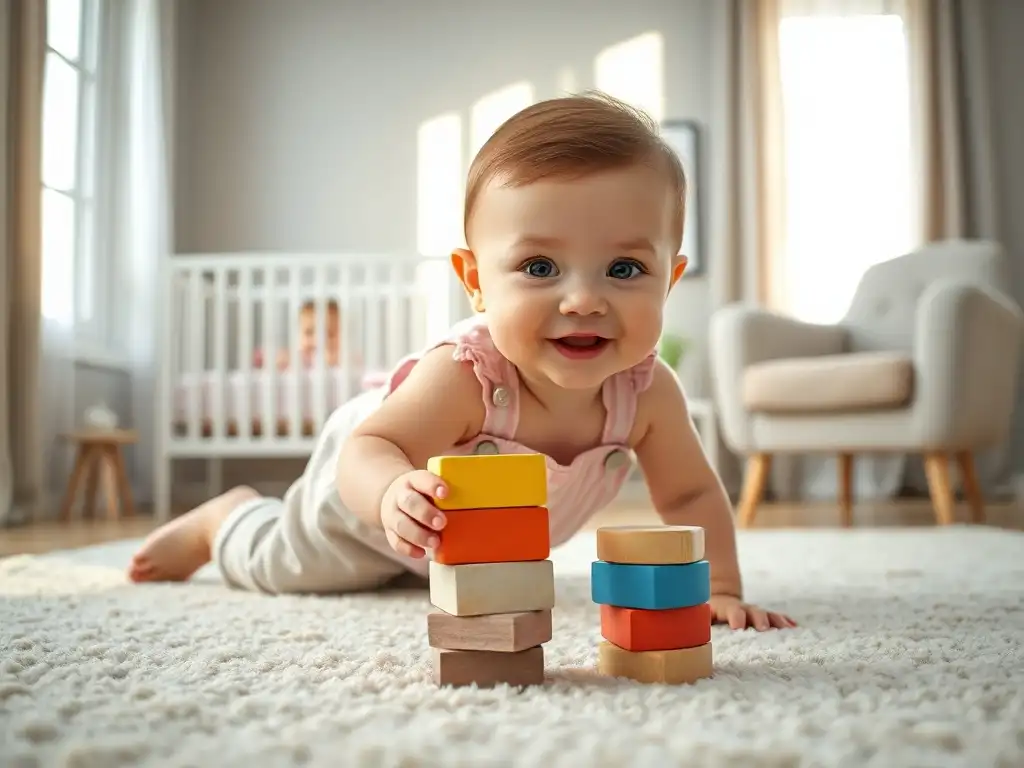
During this period, many babies master crawling, a significant milestone in their gross motor skill development. This isn't a uniform process; some babies may crawl in a traditional manner, while others might adopt a "army crawl," using their arms and abdomen to propel themselves forward. The important thing is the forward movement and the strengthening of core muscles. Observe your baby's preferred method and encourage their efforts with plenty of tummy time and opportunities to explore. Providing a safe, open space with enticing toys just out of reach can motivate them to crawl further and faster.
You might notice your little one also beginning to pull themselves up to a standing position using furniture or other stable objects. This is a crucial step towards walking, showcasing their growing strength and coordination. They may even be able to stand briefly, albeit unsteadily, before needing to sit or lower themselves back down. This stage is all about building strength and confidence. Remember to baby-proof your home thoroughly, ensuring that furniture is stable and that there are no hazards within their reach as they become more mobile.
The development of these skills is a testament to their rapidly improving balance and coordination. This is a period of significant advancement in their gross motor skills, laying the foundation for future mobility. Remember to celebrate each small victory! 🎉
9-12 Months: Walking and Exploring
Between 9 and 12 months, the focus shifts towards independent walking and exploration. While some babies might start walking as early as 9 months, others may take a little longer, reaching this milestone closer to their first birthday. There's a wide range of normal development, so don't compare your baby to others. Focus on your baby's individual progress. Many babies will first cruise – walking while holding onto furniture – before taking their first independent steps. This cruising phase is essential for building leg strength and balance.
Once they feel confident enough, they'll begin to let go and take those precious first steps. This is a truly exciting time for both baby and parent! As they become more mobile, their world expands significantly. They'll explore their environment with increased curiosity, investigating objects and spaces previously inaccessible. Encourage this exploration by providing a safe and stimulating environment, filled with age-appropriate toys and opportunities for discovery. Remember to supervise them closely, as their newfound mobility also brings increased risk.
This stage is marked not only by the achievement of walking but also by the burgeoning sense of independence and exploration. The development of walking is a key component in the overall development of their gross motor skills, opening up a whole new world of possibilities and experiences for your little one. This period is filled with incredible growth and remarkable achievements in their motor development. Enjoy this exciting phase of development! 👣
Supporting Your Baby's Gross Motor Skill Development
Understanding baby gross motor skill development is crucial for first-time parents. This section focuses on practical strategies to actively support your little one's journey from tummy time to walking. Remember, every baby develops at their own pace, but consistent encouragement and a stimulating environment can significantly influence their progress. We'll explore ways to nurture your baby's natural inclination towards movement and help them reach their developmental milestones. The key is to provide opportunities for exploration and practice, while always prioritizing safety.
Creating a Safe and Stimulating Environment for Baby's Motor Skills
A baby's environment plays a pivotal role in their gross motor skill development. Creating a safe and stimulating space is paramount. This means baby-proofing your home rigorously to eliminate hazards. Secure electrical outlets, cover sharp corners, and remove any small objects that could be choking hazards. Remember, a safe space is a space where your baby can explore freely without risk of injury.
Beyond safety, consider the stimulating aspects of the environment. Babies thrive on visual and tactile stimulation. Think vibrant colors, contrasting patterns, and textured surfaces. A playmat with various textures can be incredibly beneficial. Consider hanging mobiles with different shapes and sizes to encourage head lifting and tracking. Remember to rotate toys and activities regularly to maintain your baby's interest and prevent boredom.
Here's a checklist to ensure a safe and stimulating environment:
| Item | Safe & Stimulating? | Notes |
|---|---|---|
| Electrical Outlets | ✅ | Covered with safety plugs |
| Sharp Corners | ✅ | Protected with corner guards |
| Small Objects | ✅ | Removed from reach |
| Playmat | ✅ | Provides varied textures and visual stimulation |
| Mobiles | ✅ | Hanging mobiles with contrasting colors and shapes |
| Floor Space | ✅ | Ample space for crawling and rolling |
| Soft, Safe Surfaces | ✅ | Rugs or mats to cushion falls |
Regularly assess your home for potential hazards and adjust the environment as your baby's mobility increases. This proactive approach ensures a safe and engaging space for your baby's physical development. Remember, a safe environment fosters confidence and encourages exploration, both crucial components of healthy motor skill development.
Engaging Activities to Promote Baby's Physical Development
Engaging your baby in age-appropriate activities is key to fostering their gross motor skills. These activities should be fun, interactive, and tailored to your baby's developmental stage. Remember to always supervise your baby closely during any activity.
For newborns, tummy time is crucial. Start with short sessions (a few minutes at a time) and gradually increase the duration as your baby gets stronger. Tummy time strengthens neck and back muscles, essential for later milestones like rolling over and crawling. You can make tummy time more engaging by placing interesting toys within reach.
As your baby grows, introduce activities that encourage rolling, sitting, and crawling. These activities help develop core strength, balance, and coordination. Consider using a soft playmat to cushion falls and provide a safe space for exploration. Remember to praise and encourage your baby's efforts, even if they don't immediately succeed. Positive reinforcement is key to building their confidence and motivation.
Here are some examples of activities to promote physical development at different stages:
- 0-3 Months: Tummy time, gentle stretching exercises, interactive play with mobiles.
- 3-6 Months: Rolling exercises, reaching for toys, supported sitting.
- 6-9 Months: Crawling, pulling to stand, cruising along furniture.
- 9-12 Months: Standing independently, taking first steps, playing with larger toys.
Remember to observe your baby's cues. If they seem tired or frustrated, take a break and try again later. Always prioritize fun and engagement over forcing specific movements.
Identifying Potential Delays in Gross Motor Skill Development
While every baby develops at their own pace, it's important to be aware of potential delays in gross motor skill development. Early identification is crucial for early intervention, which can significantly improve a child's outcome. While this section offers some general guidelines, it is crucial to consult your pediatrician with any concerns. They can provide a personalized assessment and guidance based on your baby's individual needs.
Some potential red flags to watch for include:
- Lack of head control by 4 months: Most babies should be able to hold their heads steady by this age.
- Inability to roll over by 6 months: Rolling over is a significant milestone that indicates strength and coordination.
- Failure to sit unsupported by 8 months: While some babies sit later, a significant delay warrants attention.
- Lack of crawling by 10 months: Crawling is a crucial stepping stone to walking.
- Inability to stand with support by 12 months: Most babies can pull themselves to stand by this age.
These are just general guidelines, and there's a wide range of normal development. However, if you have any concerns about your baby's progress, don't hesitate to contact your pediatrician. Early intervention is key to addressing any potential delays and helping your baby reach their full potential. Remember, your pediatrician is your best resource for accurate assessment and personalized advice. Don't hesitate to seek professional guidance if you have any doubts or concerns. 👶
When to Consult a Pediatrician Regarding Baby's Motor Skills
Monitoring your baby's gross motor skill development is crucial for ensuring their healthy growth. While developmental timelines provide a general guideline, individual variations are expected. However, certain red flags warrant a prompt consultation with your pediatrician. These aren't necessarily cause for immediate alarm, but rather opportunities for professional assessment and early intervention if needed.
One key indicator is a significant delay in achieving milestones. For example, if your baby isn't showing signs of rolling over by 6 months, sitting unsupported by 8 months, or crawling by 10 months, it's vital to discuss this with your pediatrician. Remember, these are averages; some babies may develop slightly faster or slower. The concern arises when there's a substantial delay compared to the expected range. Your pediatrician can assess whether this delay is within the normal variation or indicative of a potential underlying issue.
Another crucial aspect to consider is asymmetry in movement. If your baby consistently favors one side of their body, showing a preference for using one arm or leg more than the other, it's essential to seek professional advice. This could indicate muscle weakness or neurological issues requiring investigation. Early detection and intervention are key in such cases. This asymmetry might manifest in various ways, such as consistently turning their head to one side, only reaching for objects with one hand, or showing a preference for crawling on one side.
Furthermore, unusual muscle tone should raise concerns. Hypotonia (low muscle tone), characterized by floppiness, or hypertonia (high muscle tone), characterized by stiffness, can both impact motor skill development and require medical attention. These conditions can affect the baby's ability to control their movements and achieve developmental milestones. A pediatrician can conduct a thorough examination to evaluate muscle tone and identify any underlying causes.
Finally, any noticeable limitations in movement or persistent difficulty achieving specific milestones should prompt a visit to your pediatrician. This could involve difficulties rolling over, sitting, crawling, or pulling themselves up. Your pediatrician can assess the situation, rule out any underlying medical conditions, and recommend appropriate interventions or therapies if necessary. Early intervention is often key to maximizing a child's developmental potential. Don't hesitate to seek professional help if you have any concerns about your baby's motor skill development; early intervention can make a significant difference. Remember, your pediatrician is a valuable resource in guiding you through this journey.
Understanding the Importance of Tummy Time for Baby's Development

Tummy time is crucial for a baby's baby gross motor skill development, playing a pivotal role in building strength, coordination, and overall physical development. It's not just about strengthening muscles; it contributes significantly to cognitive development and sensory exploration. Many parents underestimate its importance, focusing solely on other developmental aspects. However, consistent tummy time provides a foundation for future milestones like crawling, sitting, and walking.
Think of it as the essential groundwork for a baby's active and independent life. Neglecting tummy time can lead to delays in achieving these milestones, potentially impacting a child's overall development. Early intervention is key, and understanding the benefits of tummy time empowers parents to actively participate in their baby's healthy growth.
Benefits of Tummy Time for Gross Motor Skills and Development
Tummy time offers a plethora of benefits for your baby's physical development. Firstly, it strengthens the neck, shoulder, and back muscles. These muscles are essential for lifting the head, pushing up, and eventually crawling. Consider this: a baby who regularly engages in tummy time will develop the necessary strength to support their own weight, a critical step towards mobility. This isn't just about physical strength; it also improves their balance and coordination. The constant adjustments required during tummy time train their body to maintain equilibrium, preparing them for more complex movements later on.
Secondly, tummy time significantly contributes to the development of fine motor skills. As babies push themselves up, they begin to use their hands to support themselves, strengthening their wrists and fingers. This early strengthening is directly linked to their ability to grasp objects later on. Furthermore, the experience of manipulating toys while on their stomach enhances hand-eye coordination. This is a critical developmental aspect that directly influences their future ability to write, draw, and perform other fine motor tasks.
Finally, tummy time fosters overall muscle tone and strength, laying the groundwork for future physical activities. A stronger core and improved muscle tone are not only beneficial for gross motor skills but also contribute to better posture and overall physical health. It's a holistic approach to development, influencing various aspects of the baby's physical capabilities. The benefits extend beyond just the immediate physical impacts; it creates a positive feedback loop, boosting their confidence and encouraging further exploration and movement.
How to Make Tummy Time Fun and Engaging for Your Baby
Making tummy time enjoyable is key to its success. A frustrated baby is unlikely to cooperate. Here are a few strategies to transform tummy time from a chore into a fun activity:
- Keep it short and sweet: Start with short sessions (a few minutes at a time) and gradually increase the duration as your baby gets stronger and more comfortable. Never force your baby to stay on their tummy if they are visibly upset.
- Create a stimulating environment: Place colorful toys, rattles, or textured objects within your baby's reach. This encourages them to reach, push, and explore, making the experience more engaging. Consider using a baby gym or play mat specifically designed for tummy time.
- Engage with your baby: Talk, sing, or make silly faces to keep your baby entertained. Your interaction makes the experience more enjoyable and encourages them to participate actively. Maintain eye contact and offer positive reinforcement.
- Vary the position: Don't always place your baby on a flat surface. Try placing them on your lap, across your legs, or on an incline. This provides different challenges and keeps things interesting.
- Offer different textures: Experiment with different surfaces like a soft blanket, a firm mat, or even a textured play mat. This stimulates their senses and encourages exploration.
Remember, consistency is key. Regular tummy time sessions, even if short, will yield significant benefits for your baby's baby gross motor skill development. Observe your baby's cues and adjust the duration and environment accordingly. The goal is to create a positive and stimulating experience that your baby will enjoy. By following these simple tips, you can ensure that tummy time becomes a fun and beneficial part of your baby's daily routine. 🎉
Playing and Exercising: Fun Ways to Encourage Gross Motor Skills in Infants
This section focuses on practical, enjoyable activities to stimulate your baby's gross motor skill development. Remember, every baby develops at their own pace, so celebrate each milestone reached and don't compare your little one to others. The key is consistent engagement and a playful approach. Consistent engagement with these activities will contribute significantly to your baby's baby gross motor skill development.
Interactive Games for Enhancing Baby's Motor Skills
Engaging your baby in playful interaction is a fantastic way to encourage gross motor skill development. Here are some ideas, categorized by age range, to help you tailor your approach:
0-3 Months:
- Tummy Time Fun: Place your baby on their tummy for short periods (starting with just a few minutes) on a soft surface. Use brightly colored toys or rattles to entice them to lift their head and chest. This strengthens neck and shoulder muscles, crucial for later rolling and crawling. Remember to always supervise your baby during tummy time.
- Interactive Play with Mobiles: Mobiles with contrasting colors and interesting textures can captivate your baby's attention, encouraging them to reach and kick, thus improving eye-hand coordination and leg strength.
- Gentle Leg Bounces: Support your baby's head and gently bounce their legs, helping them to develop leg muscle strength. This can be done while singing or talking to them.
4-6 Months:
- Reaching and Grabbing Games: Place toys just out of reach to encourage your baby to reach, stretch, and grab. This enhances their arm and shoulder strength and improves hand-eye coordination.
- Rolling Encouragement: Gently roll your baby from back to side and vice-versa, supporting their head and body. This helps them understand the concept of rolling and builds the muscles needed for this important milestone.
- Supported Sitting: Help your baby sit up with support, using pillows or your own hands. This improves their core strength and balance, crucial for future sitting independently.
7-12 Months:
- Crawling Challenges: Create a fun obstacle course with pillows or blankets to encourage crawling. This strengthens their arms, legs, and core.
- Pulling to Stand: Place toys on a sturdy surface just high enough to encourage your baby to pull themselves up to stand. Supervise carefully to prevent falls.
- Cruising Fun: Encourage your baby to cruise (walk while holding onto furniture) by placing attractive toys along a furniture line. This helps them develop balance and leg strength.
Remember to always prioritize safety and supervise your baby closely during these activities. Adapt the games to your baby's developmental stage and always celebrate their progress! These activities are key to fostering healthy baby gross motor skill development.
Simple Exercises to Strengthen Baby's Muscles
In addition to interactive games, simple exercises can further support your baby's gross motor skill development. These exercises should always be performed gently and with your baby's comfort in mind. Stop if your baby shows any signs of discomfort or distress.
Exercises for 0-3 Months:
- Neck Strengthening: Gently support your baby's head and neck while lying them on their back and slowly turn their head from side to side. Repeat several times.
- Leg Exercises: Gently lift and lower each leg individually, supporting your baby's head and neck.
- Arm Exercises: Gently lift and lower each arm, supporting your baby's head and neck.
Exercises for 4-6 Months:
- Tummy Time Variations: Try placing your baby on their tummy across your lap, supporting their chest and encouraging them to lift their head and shoulders.
- Supported Sitting with Movement: While supporting your baby in a sitting position, gently rock them back and forth. This helps improve their balance and core strength.
Exercises for 7-12 Months:
- Supported Standing: Hold your baby under their arms and gently help them stand. Encourage them to bounce slightly, supporting their weight as needed.
- Reaching and Grabbing Exercises: Hold a toy just out of reach and encourage your baby to reach for it, building their arm and shoulder strength.
Always follow your pediatrician’s advice and adjust the exercises based on your baby’s individual needs and development. The consistent incorporation of these simple exercises, alongside playtime, will positively contribute to your baby’s baby gross motor skill development. Remember to make it fun and engaging! A happy baby is a developing baby! 👶
Monitoring Your Baby's Progress: Milestones and Red Flags
This section focuses on tracking your baby's gross motor skill development, highlighting key milestones and potential red flags. Regular observation is crucial for early identification of any delays, allowing for timely intervention and support. Remember, every baby develops at their own pace, but understanding typical developmental patterns is essential for informed parenting. Consistent monitoring allows you to celebrate achievements and address any concerns promptly. This proactive approach contributes significantly to your baby's healthy development.
Recognizing Key Gross Motor Milestones in Infancy
Tracking your baby's progress in gross motor skills involves observing their ability to control and coordinate their larger muscle groups. These milestones are typically achieved within a range, not necessarily on a specific date. Here’s a timeline of expected developments:
| Age Range (Months) | Milestone | Notes |
|---|---|---|
| 1-3 | Head control while held upright | Some head bobbing is normal at first. |
| 2-4 | Rolling over (both ways) | May start with rolling from tummy to back first. |
| 4-6 | Sitting unsupported | May need brief support initially; progresses to independent sitting. |
| 4-7 | Reaching for and grasping objects | Initially clumsy, improves in precision over time. |
| 6-8 | Crawling or other forms of self-locomotion | Methods vary; some skip crawling altogether and move directly to pulling up. |
| 7-10 | Pulling to stand using furniture | Important step towards walking. |
| 9-12 | Cruising (walking while holding onto furniture) | Builds strength and balance before independent walking. |
| 10-15 | Walking independently | Some babies walk earlier or later; this is a significant milestone. |
Remember, this is a general guideline. Some babies may reach these milestones earlier or later than indicated. The key is to observe a consistent pattern of progress. For example, if your baby consistently lags behind in several areas, it's time to consult your pediatrician.
Signs that May Indicate a Developmental Delay in Gross Motor Skills
While variations in developmental timing are common, certain signs might warrant a discussion with your pediatrician. These aren't necessarily cause for immediate alarm, but rather indicators that deserve professional attention. Early intervention can significantly impact a child's development. These signs include:
- Significant delays in reaching milestones: If your baby is consistently behind in multiple gross motor milestones compared to age-appropriate expectations, it's important to seek professional advice. For example, not rolling over by 6 months or not sitting unsupported by 9 months could be indicators.
- Lack of progress over several weeks: Even if your baby is within the typical range, a lack of noticeable progress for an extended period should be noted. For instance, if your baby shows no improvement in head control over several weeks, it warrants attention.
- Asymmetry in movement: Noticeable differences in strength or movement between the left and right sides of the body (e.g., consistently favoring one side when rolling or crawling) should be evaluated.
- Floppy or stiff posture: Excessive floppiness (hypotonia) or stiffness (hypertonia) can indicate underlying neurological issues.
- Difficulty with weight-bearing: Consistent avoidance of weight-bearing activities, such as pushing up on their arms during tummy time, could be a red flag.
- Persistent inability to meet developmental milestones: Consistent failure to achieve significant milestones, such as sitting or crawling, despite ample opportunities and encouragement, should be discussed with your pediatrician.
It is crucial to remember that this information is for educational purposes only and does not substitute professional medical advice. If you have any concerns about your baby's development, consulting your pediatrician is essential. Early intervention is key to supporting your baby's optimal development. Early identification and intervention can make a significant difference in a child's overall progress and well-being. 👶
Frequently Asked Questions
What are gross motor skills?
Gross motor skills are large movements your baby makes using their arms, legs, and torso. These include rolling over, sitting, crawling, and walking. Developing these skills is a crucial part of your baby's growth.
When do babies typically start developing gross motor skills?
Development varies, but many babies begin showing early signs around 3-6 months, like lifting their heads. Significant milestones, like crawling and walking, usually happen between 6 and 15 months. It's a gradual process.
How can I encourage my baby's gross motor skill development?
Provide a safe and stimulating environment with tummy time, plenty of space to move, and age-appropriate toys. Interaction and playful activities, like reaching for objects, greatly assist development.
What are some signs of delayed gross motor skill development?
If your baby isn't meeting expected milestones within a reasonable timeframe, or shows significant asymmetry in movement, consult your pediatrician. Early intervention is key.
My baby is developing slower than others. Should I worry?
Every baby develops at their own pace. While it's good to be aware of milestones, don't compare your baby to others. If you have concerns, discuss them with your pediatrician for personalized advice.
Final Reflection: Unlocking a World of Movement: The Journey of Gross Motor Skill Development
Understanding a baby's journey of gross motor skill development is not merely about milestones; it's about unlocking a world of potential and independence. The seemingly small movements—a first roll, a tentative crawl, the exhilarating first steps—represent monumental leaps in a child's physical and cognitive development, profoundly shaping their future interactions with the world. This understanding is crucial for parents, caregivers, and educators alike, impacting how we support and nurture a child's growth.
Witnessing a child's mastery of gross motor skills is a deeply moving experience, a testament to the incredible power of the human body and the unwavering spirit of a child. The greatest discovery of all time is that a person can change his future by merely changing his attitude.
- Oprah Winfrey. This quote resonates deeply because a child's attitude towards movement, fostered by supportive environments and encouragement, directly impacts their progress and confidence. The social and cultural impact is significant; early intervention and understanding can prevent developmental delays and ensure every child has the opportunity to reach their full potential, regardless of their background or circumstances.
Now, consider your own experiences with movement and physical development. Reflect on the moments of triumph and the challenges you overcame. How can you apply this knowledge to support the children in your life? Embrace the journey of gross motor skill development, not just as a checklist of milestones, but as a celebration of growth, resilience, and the boundless potential within each child. By understanding the process, we can create nurturing environments that empower children to explore, learn, and move confidently into their future.
Unlock Your Baby's Potential: Boosting Gross Motor Skills Today!
Thank you for learning about your baby's exciting gross motor development! We hope you found our insights valuable. Now let's put that knowledge into practice.
- Create a stimulating play environment: A soft, colorful space with ample tummy time is crucial for building strength and coordination. This is key to your baby's development.
- Share your baby's milestones: Connect with other parents on our BabyCareHub community forums to share your baby's progress and fun activities. Let's celebrate those early achievements together!
- Document those precious moments: Capture your baby's developmental journey with photos or videos—memories you'll treasure as they grow.
What simple activity will you try today to encourage your baby's gross motor skills?